
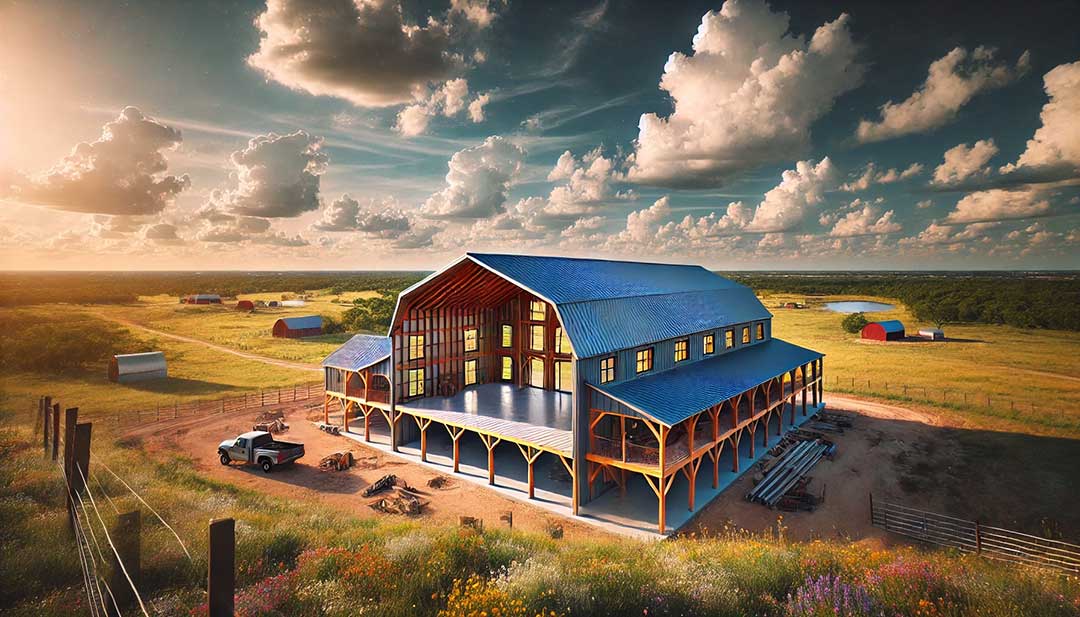
Building a barndominium in Texas offers you affordable land, minimal restrictions, and a unique rural lifestyle. You can choose from various construction types, like red iron steel or pole barn designs, tailored to your needs. Depending on where you are, you might face different permitting requirements. Also, consider the local climate when planning your build. With costs ranging from $100 to $225 per square foot, it’s smart to plan ahead. Discover more about the process and options available to you.
Why Texas?
When you consider building a barndominium, Texas stands out as an ideal choice.
You’ll find abundant rural land available at affordable prices, giving you plenty of room to create your dream space. In unincorporated areas, minimal building code restrictions make the process smoother and faster.
Texas has a rich culture of metal buildings and ranch-style living, making a barndominium a natural fit. Plus, many counties offer favorable property tax rates, which can save you money in the long run.
Whether you want a full-time residence, a weekend getaway, or even an income-generating rental, Texas provides the perfect backdrop for your barndominium project.
You’ll love the flexibility and opportunities this state offers.
Permitting & Codes
Maneuvering through the permitting and codes for your barndominium can be straightforward, especially if you understand the differences between unincorporated areas and city limits.
In unincorporated counties, you’ll often face fewer restrictions and may not even need to deal with a formal building department, speeding up the process.
However, if you’re within city limits or Extraterritorial Jurisdiction (ETJ), be prepared for more regulations, including building permits and inspections.
Additionally, if you’re in Gulf Coast counties, ensuring your plans meet Texas Windstorm Insurance Association requirements is essential.
Always make sure your engineered plans are tailored to your specific zip code to avoid any surprises down the line.
Following these guidelines helps streamline your barndominium project.
Common Barndo Construction Types in Texas
Understanding the permitting and codes sets the stage for selecting the right construction type for your barndominium. In Texas, you’ll find a few common construction types to evaluate.
Red Iron Steel framing is heavy-duty, perfect for large open spaces and long-lasting durability. Cold Formed Steel offers lighter framing, which is quicker to erect and more energy-efficient.
If you’re in a rural area, you might lean toward a Pole Barn or Post Frame design, though these can be harder to permit in cities.
Another option is SIP (Structural Insulated Panels), known for high efficiency and faster drying times, though they’re less common.
Choose a type that aligns with your vision, budget, and local codes.
Climate Considerations
As you plan your barndominium in Texas, it’s crucial to take into account the diverse climate zones across the state.
In North and West Texas, you’ll need to focus on insulation to combat heat and occasional freezes.
For South Texas and the Gulf Coast, design your barndo to withstand high winds and humidity, ensuring proper ventilation and moisture barriers.
If you’re considering the Hill Country, enjoy the scenic views but be aware that rocky soil can increase your foundation costs.
Each zone has its unique challenges, so tailor your construction materials and methods accordingly to create a comfortable, durable, and energy-efficient home that withstands Texas weather.
Cost to Build in Texas
When you’re budgeting for your barndominium in Texas, it’s essential to contemplate the various costs involved in the building process.
You can expect to spend between $100 and $135 per square foot if you manage trades yourself with local contractors. For a more hands-off approach, turnkey builders range from $150 to $225 per square foot, depending on your finishes and location.
If you’re considering barndo kits, they typically cost around $25 to $55 per square foot for the shell alone, not including land, slab, utilities, or interior finishes.
Keep in mind that additional expenses, like permits for septic systems and utilities, can add to your overall budget. Planning ahead can save you from unexpected costs.
Conclusion
As you commence your barndominium journey in Texas, remember that every nail you drive is a step towards your dream home. With the Lone Star State’s open skies and vast landscapes, you’re not just building a house; you’re crafting a sanctuary. Embrace the freedom of fewer restrictions and let your creativity flow like the Texas rivers. Soon, you’ll be sipping sweet tea on your porch, watching the sun set over your beautiful, rustic retreat.